Listicle · 9 min read · June 1, 2026
10 Realistic Focus Session Routines Freelancers Actually Stick To
If you've ever ended a workday wondering where the hours went, you're not alone — and the solution isn't grinding harder. The routines that actually stick are built around a handful of science-backed principles: ultradian rhythm cycles, structured intervals, and intentional time-blocking. This article breaks down 10 realistic focus session routines that real freelancers use to protect their peak hours, eliminate task-switching chaos, and do their best client work without burnout.
- Science matters: Your brain naturally oscillates between roughly 90 minutes of high alertness and 20 minutes of mandatory rest — this is called the Basic Rest-Activity Cycle, and the best routines are designed around it [1].
- Context-switching is expensive: Each time you shift tasks, mental "gear-shifting" costs an additional 5–10 minutes of reduced efficiency, compounding across a full workday [7].
- Short sprints work: Multiple workplace studies across IT, marketing, and finance found that structured interval work increased output by 25–35% compared to unstructured work [4].
- Makers need long blocks: Paul Graham's famous 2009 essay established that creative workers operate on a fundamentally different schedule than managers — they need half-day blocks, not hourly slices [5].
- Tracking builds momentum: Logging your sessions creates visible streaks that reinforce the habit loop and reveal patterns in your productivity over time.
- Personalization is the key to sticking with it: No single routine works for every freelancer — this list covers beginner-friendly sprints all the way to advanced deep-work architectures.
| Routine | Session Length | Break | Best For | Difficulty |
|---|---|---|---|---|
| Classic Pomodoro | 25 min | 5 min | Beginners, scattered focus | Easy |
| Extended Pomodoro | 50 min | 10 min | Intermediate, writing/coding | Easy–Medium |
| 90-Minute Ultradian Block | 90 min | 20 min | Deep work, complex projects | Medium |
| Maker's Half-Day | 3–4 hrs | Lunch | High-output creation days | Hard |
| Hormozi Maker Morning | ~4 hrs AM | Afternoon switch | Business owners, content creators | Hard |
| 2+2 Split | 2×2-hr blocks | 1-hr gap | Balancing client + personal projects | Medium |
| Single-Task Day | Full day | Natural breaks | Deadline-crunch, big deliverables | Medium |
| Anchor Session | 60 min (same time daily) | Flexible | Habit-building from scratch | Easy |
| Themed-Day Schedule | Full day per theme | Overnight | Multi-client freelancers | Medium |
| Shutdown Ritual Session | 30 min EOD | None (day ends) | Preventing overwork, closure | Easy |
TL;DR: Match your focus session length to your brain's natural 90-minute rhythm, protect your morning blocks like calendar gold, and log every session — the compound effect of a tracked streak is what turns a "routine" into an identity.
The Science That Makes These Routines Actually Work
Before diving into the list, it's worth understanding why these specific structures are recommended — because the biology is surprisingly compelling.
The 90-Minute Ultradian Rhythm
Most freelancers have heard of circadian rhythms (the 24-hour body clock), but fewer know about ultradian rhythms — the shorter cycles that govern your energy throughout the day. Sleep researcher Nathaniel Kleitman, who also discovered REM sleep, first identified the Basic Rest-Activity Cycle (BRAC) showing that the body naturally alternates between higher and lower alertness every 90–120 minutes [3]. Your brain oscillates between roughly 90 minutes of high alertness and 20 minutes of mandatory rest, and ignoring it tanks your cognitive performance [1].
Peretz Lavie at the Technion Institute in Israel conducted extensive laboratory studies measuring reaction time, arithmetic performance, and sustained attention — and documented consistent oscillations aligning with this BRAC framework in subjects who weren't even aware of the 90-minute hypothesis [2]. The practical implication: your best focus sessions should be 60–90 minutes long, followed by a real rest (not a quick Twitter scroll).
Why Context-Switching Destroys Freelance Income
Freelancers manage multiple clients, projects, and communication channels simultaneously — which makes them especially vulnerable to context-switching costs. Research on task-switching suggests that mental "gear-shifting" costs an additional 5–10 minutes of reduced efficiency every single time you move between unrelated tasks [7]. Multiply that by a dozen switches a day, and you've quietly lost more than an hour of billable output before you've noticed.
For a solo operator, the financial cost is direct and personal: unchecked context-switching erodes the productive hours you actually have to sell.
"The more meetings, the less work gets done. Dividing a maker's day into minutes would be tantamount to doing nothing." — Paul Graham, Co-founder, Y Combinator [6]
Routines 1–4: Beginner-Friendly Session Structures
These four routines are the on-ramps. If you've never intentionally structured your focus time, start here. Each one asks for minimal commitment while returning outsized results.
Routine 1: The Classic Pomodoro (25/5)
Developed by: Francesco Cirillo, late 1980s
Francesco Cirillo created the Pomodoro Technique while struggling with time management as a university student — setting a tomato-shaped kitchen timer (pomodoro means "tomato" in Italian) for 25-minute work sprints separated by 5-minute breaks, with a longer 15–30 minute break after every four sessions [4]. It remains the most widely adopted structured focus method for a reason: the 25-minute ceiling is short enough to feel non-threatening, which lowers the activation energy needed to start.
A Singapore Management University study found that students using the Pomodoro Technique were better able to estimate task completion times and manage their workloads — a critical skill for freelancers quoting project timelines [4].
How to use it: Pick one task. Set a 25-minute timer. Work on nothing else. Rest for 5 minutes. Repeat. Log each completed Pomodoro — those tally marks become your first streak.
Routine 2: The Extended Pomodoro (50/10)
For creative professionals who find 25 minutes too short to achieve flow — writers, developers, designers — the 50/10 variant doubles each interval while keeping the structural discipline intact. You get 50 minutes of deep work followed by a 10-minute break that's long enough to actually decompress before the next round.
The extended format pairs naturally with logging: a 50-minute block is a clean, meaningful unit of work that's easy to record and reflect on at the end of the day.
Routine 3: The Anchor Session (60 Minutes, Same Time Daily)
If you're building a habit from scratch, consistency of timing matters more than duration. An Anchor Session is a single 60-minute focus block that happens at the same time every day — typically the first hour after your morning rituals.
The routine is simple: same chair, same time, same type of work. This predictability reduces decision fatigue and signals to your brain that it's time to produce. Track it daily, and the streak data itself becomes motivating. Read more about the psychology of building this kind of habit in our guide on how to build a daily focus habit as a freelancer.
Routine 4: The Shutdown Ritual Session (30 Minutes, End of Day)
Burnout is a documented risk for freelancers — research from the Leapers 2024 freelancing report found that 50% of freelancers were, at some point during 2024, unable to work due to poor mental health [8]. The Shutdown Ritual is the simplest protective habit on this list.
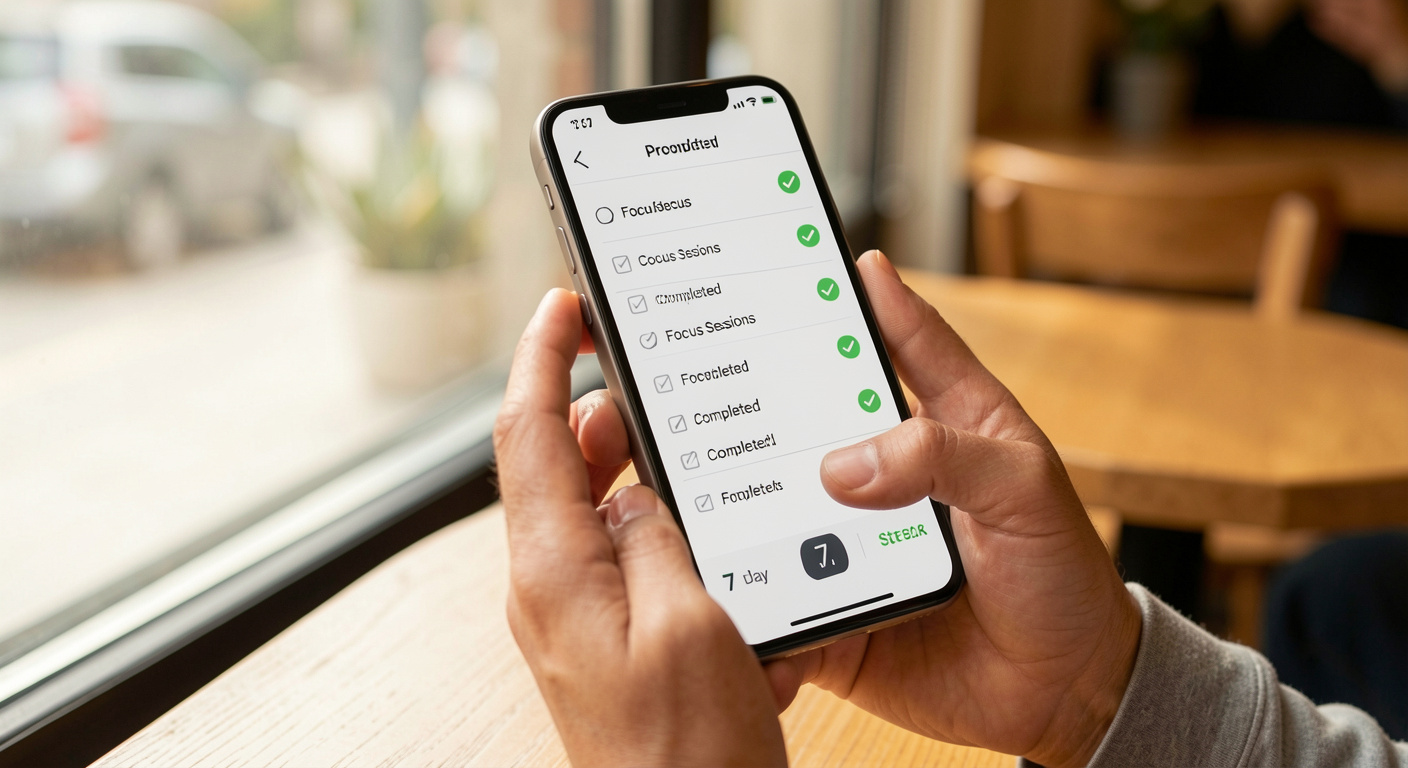
Spend the last 30 minutes of your workday on three things: review what you completed, log your sessions, and write tomorrow's top three tasks. This creates a clean psychological boundary between work and rest — and your log data shows you that the day was productive, even when it didn't feel like it.
Routines 5–7: Intermediate Structures Built Around Ultradian Science
Once the basics feel natural, these routines align your work architecture to your brain's actual biological cycles.
Routine 5: The 90-Minute Ultradian Block
This is the routine most directly validated by sleep science. A single 90-minute deep work block — the full arc of the BRAC high-alertness phase — is followed by 20 minutes of genuine rest (a walk, eyes-closed rest, or light stretching) [1][3]. Most freelancers can fit three of these blocks into a workday, with the rest periods acting as circuit breakers that prevent accumulated fatigue.
The key: the rest is not optional. Skipping it and pushing into a second 90-minute block without recovery is what turns a productive morning into an afternoon brain fog.
| Time | Activity |
|---|---|
| 8:00–9:30 AM | Deep work block 1 (client project) |
| 9:30–9:50 AM | Ultradian rest (walk, stretch, no screens) |
| 9:50–11:20 AM | Deep work block 2 (continued or new task) |
| 11:20–11:40 AM | Rest + light admin (emails, messages) |
| 11:40 AM–1:10 PM | Deep work block 3 (reactive or creative) |
| 1:10 PM onward | Lunch, calls, async comms |
Routine 6: The 2+2 Split Session
Many freelancers juggle both client deliverables and their own business development — writing, pitching, portfolio work. The 2+2 Split carves the morning into two 2-hour blocks separated by a meaningful 1-hour gap (lunch, a walk, or a nap).
The first block goes to your highest-priority client work. The second — after a genuine mental reset — goes to your own growth: writing a blog post, filming a reel, pitching new clients. The gap acts as the ultradian rest period at scale, and the separation prevents one type of work from bleeding into the other.
Routine 7: The Single-Task Day
On deadline days, the most underrated routine is radical simplicity: one project, all day. No email until the work is done. No DMs. No task-switching. Every context switch costs you 5–10 minutes of cognitive ramp-up [7], so a Single-Task Day eliminates the tax entirely.
This routine only works if you batch your administrative obligations into designated days — which is exactly where themed-day scheduling (Routine 9) becomes powerful.
Routines 8–10: Advanced Architectures for High-Output Freelancers
These are borrowed from the playbooks of founders and operators who've engineered their weeks, not just their days.
Routine 8: The Maker's Half-Day Block (Paul Graham Method)
In his influential 2009 essay, Paul Graham of Y Combinator argued that creative and technical workers operate on a fundamentally different schedule than managers [5]. A manager's schedule divides the day into hourly slots; a maker's schedule is built around long, uninterrupted blocks — half a day at minimum.
Paul Graham's framework is directly applicable to freelancers: you are always a maker. A single meeting dropped into the middle of your morning doesn't just cost the meeting time — it fragments the entire block around it, making deep work impossible in the surrounding hours [6]. The prescription: protect your mornings as a 3–4 hour maker zone, schedule all calls and meetings in the afternoon, and treat any interruption before noon as genuinely costly.
"A maker's schedule is different. It has long blocks for focusing on particular tasks, or entire days devoted to one activity." — fs.blog, summarizing Paul Graham's Maker's Schedule framework [6]
Routine 9: The Themed-Day Schedule (Hormozi Method)
Alex Hormozi, who has publicly described his evolution from a 50/50 maker-manager split to what he calls a 4:1 maker-dominance structure, batches meetings, calls, and content creation into specific afternoon windows while stacking maker days in sequence [8]. In practice, this looks like: Wednesday through Friday are creation days (writing, filming, strategy); Tuesday is the sync day (client calls, team check-ins, pitches).
For a freelancer managing two or three ongoing clients, the Themed-Day approach is transformational. By assigning each day a primary project theme, you eliminate the daily re-orientation cost of switching between client contexts. Track your themed days over a month — the streak data will reveal which themes you habitually sacrifice first, which is exactly the kind of signal you need to protect your schedule better. Explore how to read those patterns at what your focus streak data is actually telling you.
Routine 10: The Compound Streak Habit (The One You Log Every Day)
The final routine isn't a timer structure — it's a meta-habit: logging every focus session you complete, every single day, and watching the streak grow.
The number 64 million reflects how many Americans were freelancing in 2023 alone [8] — a workforce that, by and large, has no boss checking in on their daily output. The external accountability that office workers take for granted simply doesn't exist. Logging your sessions and building a visual streak creates a lightweight, self-directed accountability loop. Research on habit formation consistently shows that the visibility of consecutive progress is a primary driver of long-term behavior change. You can dig deeper into the neuroscience of that dynamic in our piece on the science behind habit streaks.
Multiple workplace studies across industries found that workers who used structured, trackable intervals — like the Pomodoro system — increased output by 25–35% compared to those working without structure [4]. The key variable isn't the specific timer you use. It's the act of logging that makes progress visible and the streak that makes stopping feel costly.
Turning a Routine Into a Streak You Can See
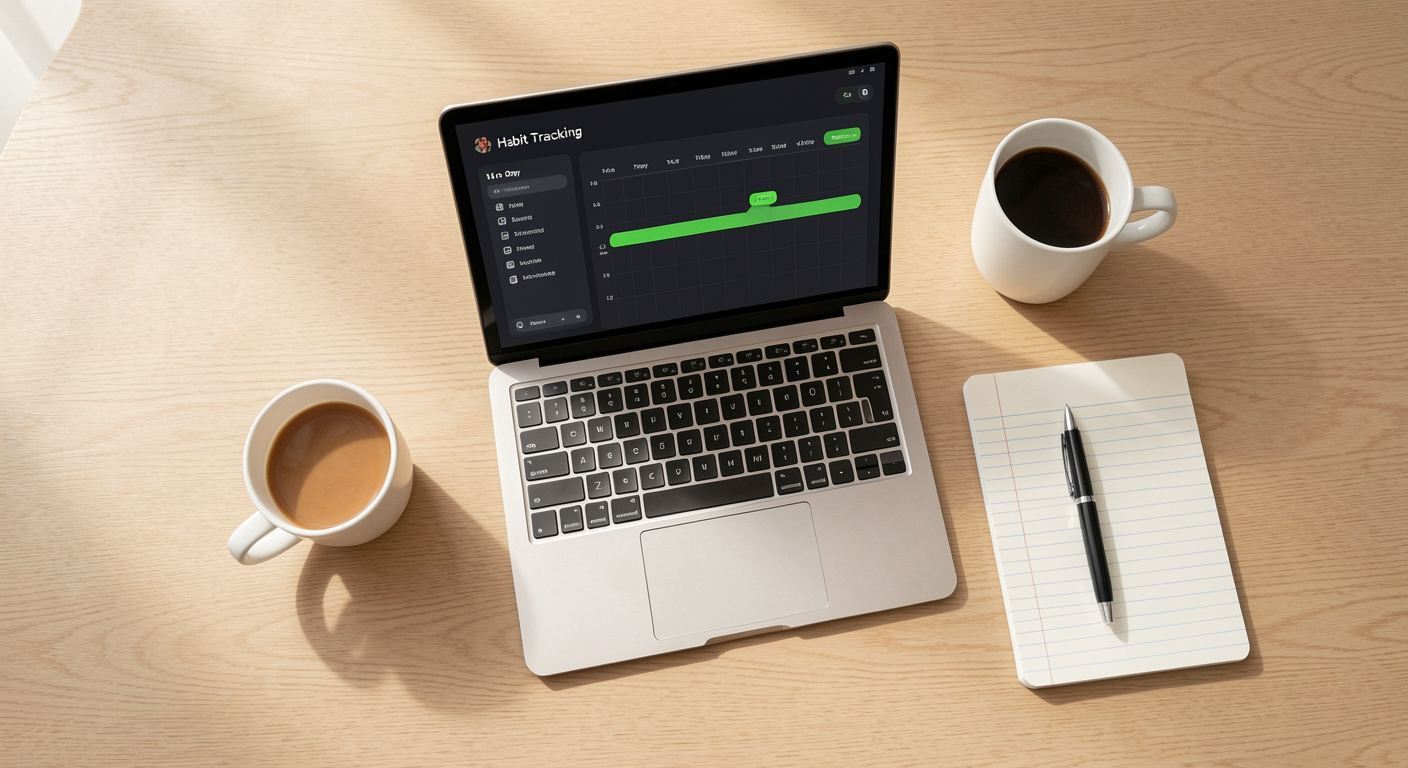
Any of the ten routines above will improve your output. But the ones that stick are the ones you can see. When a habit is tracked — when you can look at a row of green checkmarks and know that you showed up for 14 days straight — the psychological momentum compounds in ways that willpower alone never can.
That's exactly what FocusLog was built for. One page, no overwhelm — just log your daily focus sessions, watch your streaks grow, and get a clear view of when and how you do your best work. Start a free 14-day trial and bring some structure to the hours that matter most.
Frequently asked questions
What is the best focus session length for freelancers?▾
The most science-backed length is 60–90 minutes, which aligns with the ultradian Basic Rest-Activity Cycle (BRAC) identified by Nathaniel Kleitman. This is the brain's natural window of peak alertness before it needs a recovery period. Beginners can start with 25-minute Pomodoro sessions and extend the duration as their focus capacity improves.
What is the Pomodoro Technique and does it work for freelancers?▾
The Pomodoro Technique was developed by Francesco Cirillo in the late 1980s. It divides work into 25-minute focused intervals separated by 5-minute breaks, with a longer break after every four intervals. Multiple workplace studies across IT, marketing, and finance found the technique increased output by 25–35% compared to unstructured work, making it particularly effective for freelancers managing multiple client tasks.
What is Paul Graham's Maker's Schedule and how does it apply to freelancers?▾
In his 2009 essay, Y Combinator co-founder Paul Graham argued that creative workers (makers) need long, uninterrupted blocks of time — half a day minimum — rather than the hourly sliced schedule that works for managers. For freelancers, this means protecting morning hours for deep client work and scheduling all calls and meetings in the afternoon to avoid fragmenting productive blocks.
How costly is context-switching for freelancers?▾
Each time you switch between unrelated tasks, the mental 'gear-shifting' costs 5–10 minutes of reduced efficiency before you're fully re-engaged. Freelancers who switch contexts frequently throughout the day can quietly lose more than an hour of billable productivity without realizing it. Routines like the Single-Task Day and Themed-Day Schedule are specifically designed to eliminate this cost.
How do habit streaks help freelancers stay consistent?▾
Logging daily focus sessions and building a visual streak creates self-directed accountability — something freelancers don't get from external managers. The visibility of consecutive progress is a proven driver of long-term habit formation. When you can see 14 days of consistent sessions, the psychological cost of breaking the streak acts as a powerful motivator to keep showing up.
What is the ultradian rhythm and why does it matter for focus sessions?▾
The ultradian Basic Rest-Activity Cycle (BRAC), first identified by sleep researcher Nathaniel Kleitman, describes the body's natural alternation between roughly 90 minutes of high alertness and 20 minutes of lower alertness — cycling multiple times throughout the day. Peretz Lavie's laboratory studies at the Technion Institute confirmed these oscillations affect reaction time, arithmetic performance, and sustained attention. Aligning your focus sessions to these cycles means working with your biology rather than against it.
Sources
- What Is the Rest-Activity Cycle? Ultradian Rhythms | Neurosity
- Understanding Your Brain's 90-Minute Ultradian Cycles | CanElevate
- Ultradian Rhythms and Shift Design: 90-Minute Productivity Cycles | MyShyft
- The Ultimate Guide to the Pomodoro Technique | LifeAt
- Maker's Schedule, Manager's Schedule | Paul Graham
- Maker vs. Manager: How Your Schedule Can Make or Break You | Farnam Street
- AI Context Flow Stops Context Switching for Freelancers | Plurality Network
- Unlock $100M-Level Productivity: Alex Hormozi's Maker vs. Manager Schedule System | EfektasGroup
Keep reading
Ready to see it for yourself?
Back to home →